High Chai
Irani cafés, migration & culinary history in Mumbai
High Chai is a year-long research project and installation exploring the cultural, spatial, and culinary histories of Irani cafés in Mumbai. The project began with a study of coffeehouses as historical spaces of gathering, interaction, and debate, tracing how public dining environments have long functioned as sites of exchange across cultures. The second phase focused on Irani cafés in Mumbai, established in the late 19th century by Zoroastrian immigrants—first Parsis and later Iranis. As immigrant communities themselves, these cafés became layered sites of migration and adaptation within an already cosmopolitan city. They not only served affordable food to a wide range of working-class populations but also introduced one of the earliest forms of public dining culture in Mumbai.
Through extensive research, writing, and visual documentation, the project traces the migration of people, objects, and culinary practices that shaped these cafés. Iconic food items such as bun maska and chai, mawa cake, and other café specialties emerged from this blending of Persian, Parsi, and local culinary influences, becoming markers of a distinctly urban food culture. The installation reconstructs these layered histories through archival material, spatial mapping, projected imagery, and physical objects, situating the Irani café as both a lived environment and an evolving archive shaped by migration, colonial histories, and everyday urban life.
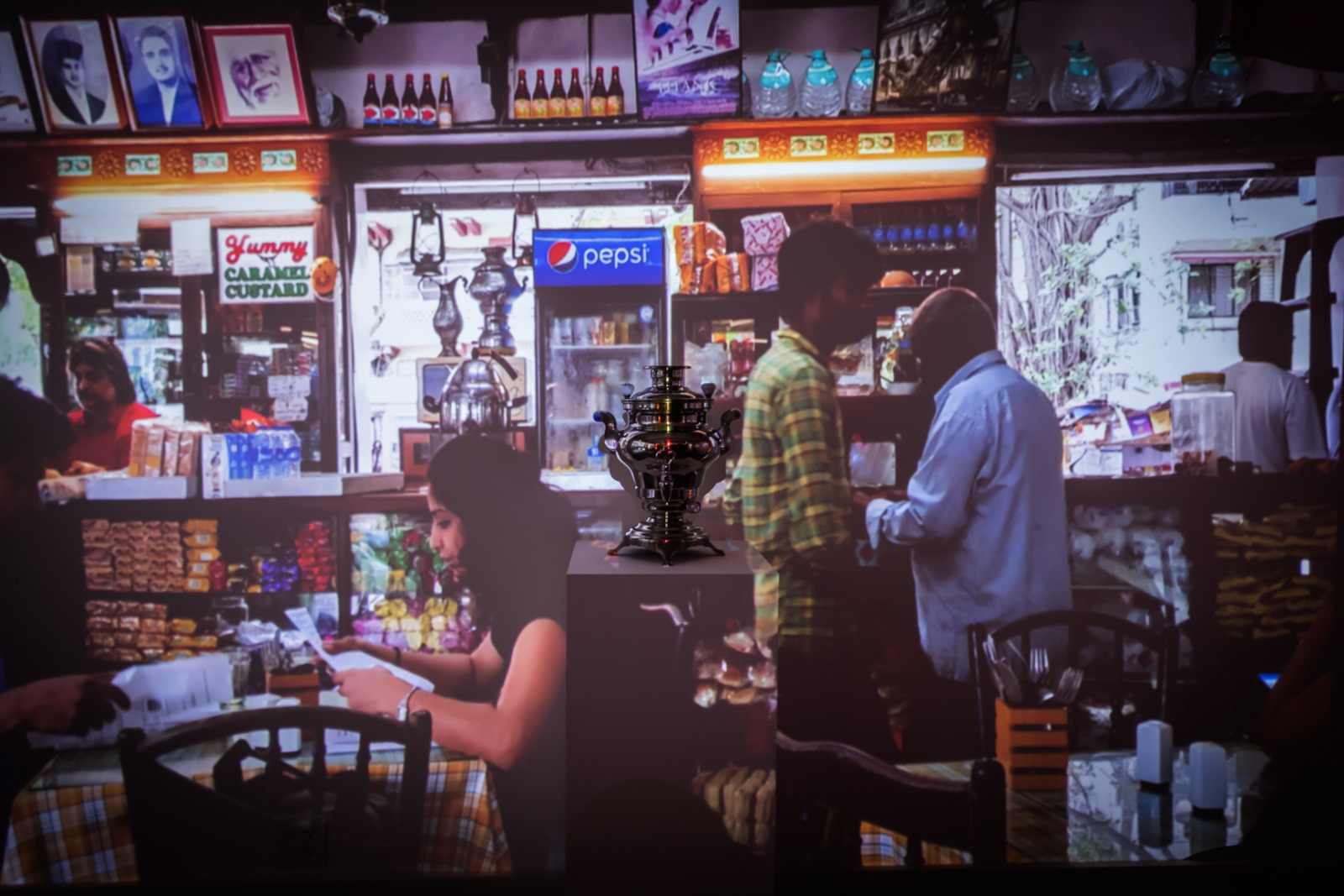
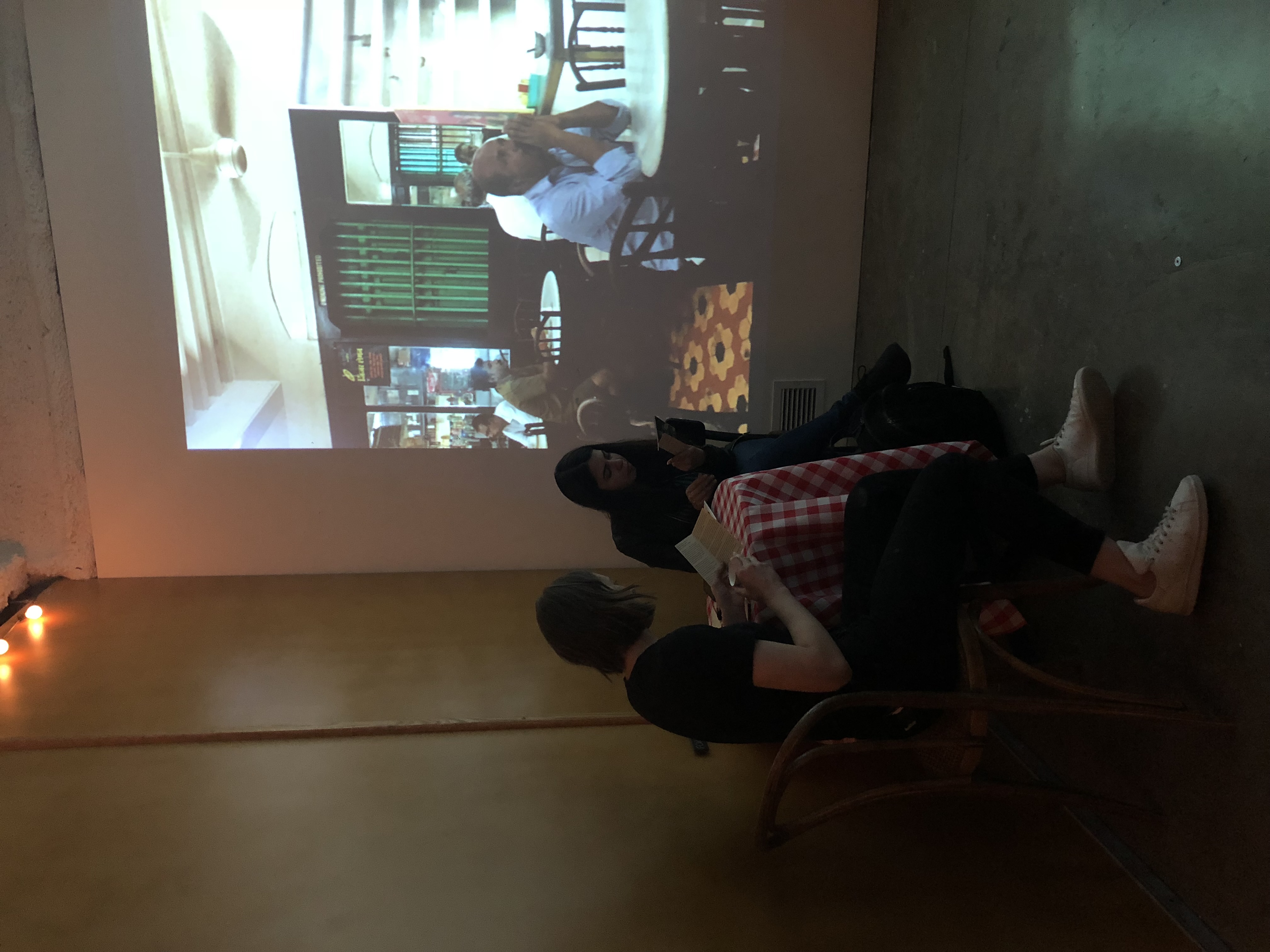
California College of the Arts — Graduate Installation
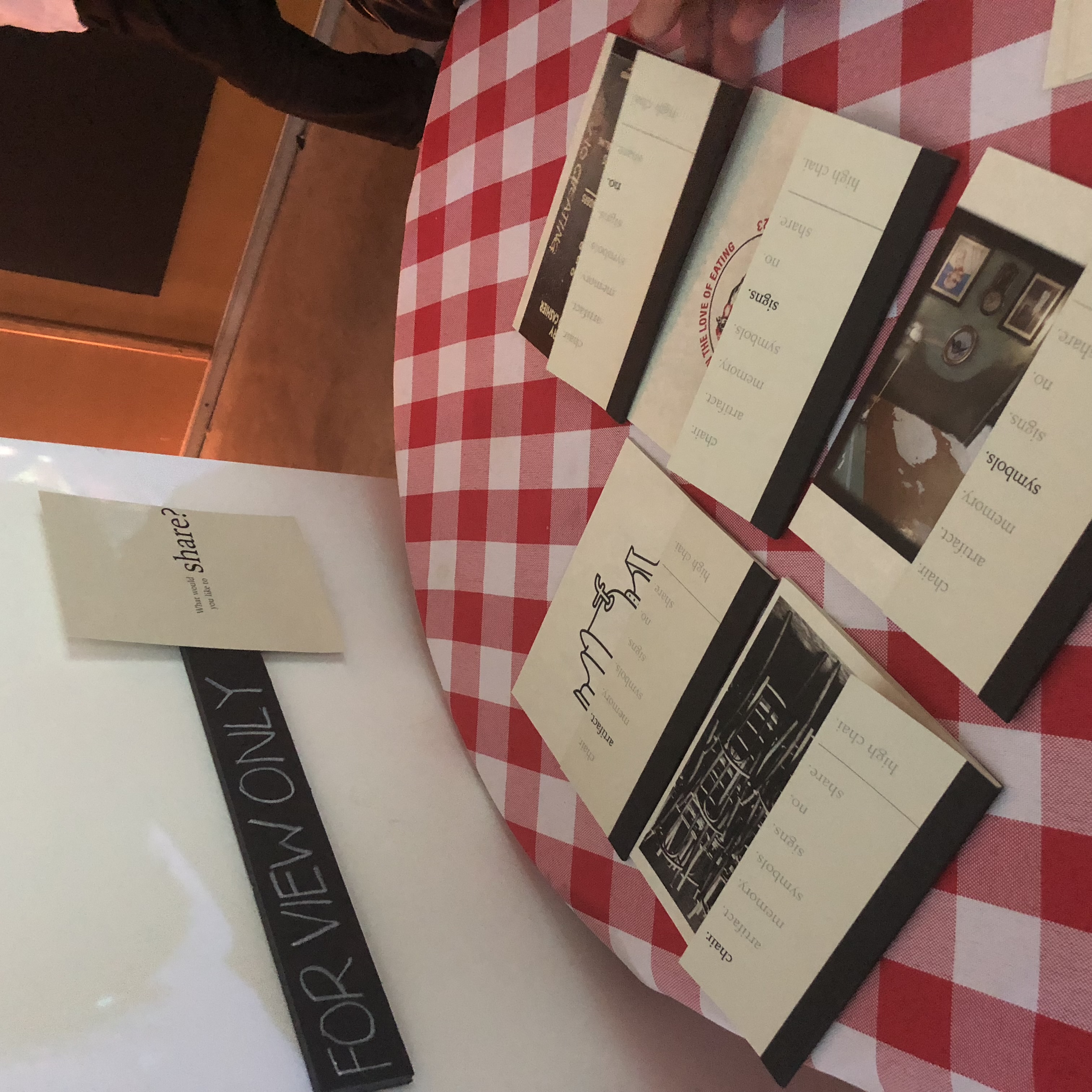
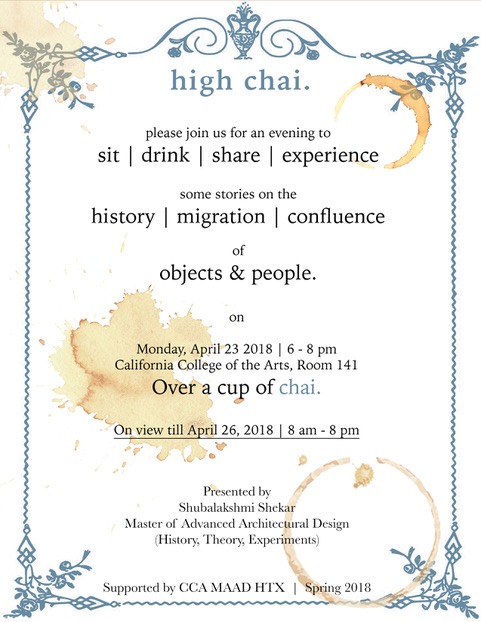
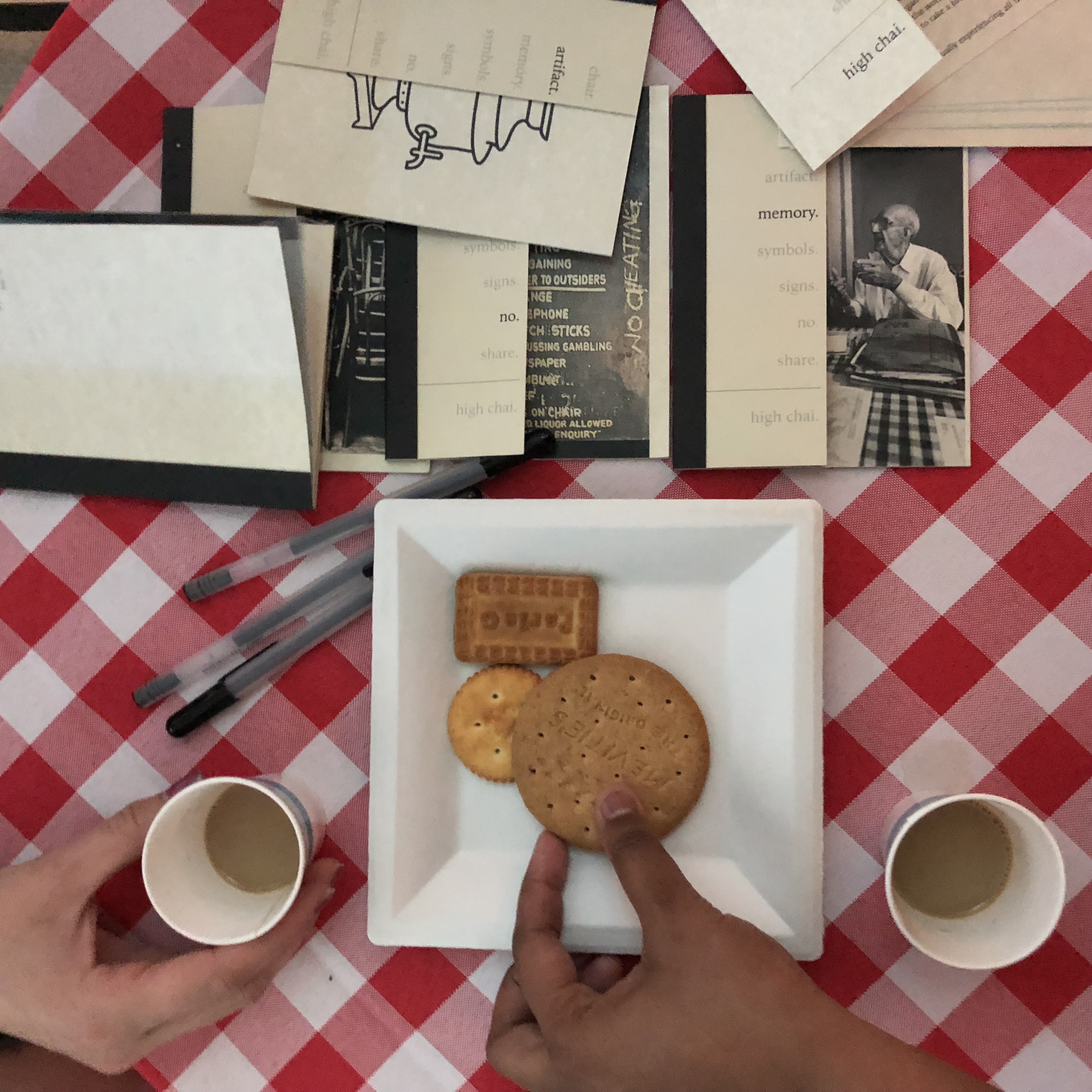
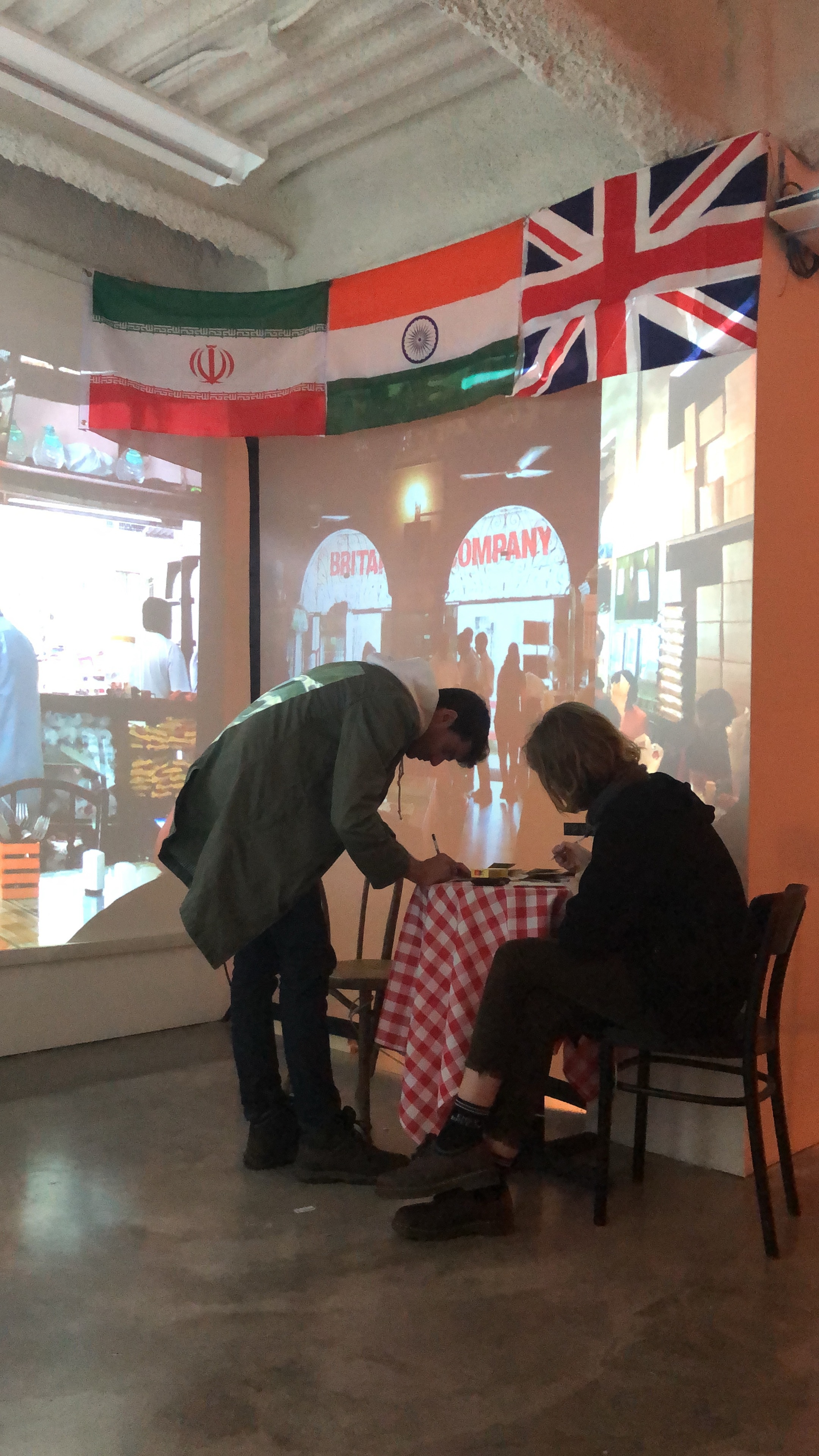
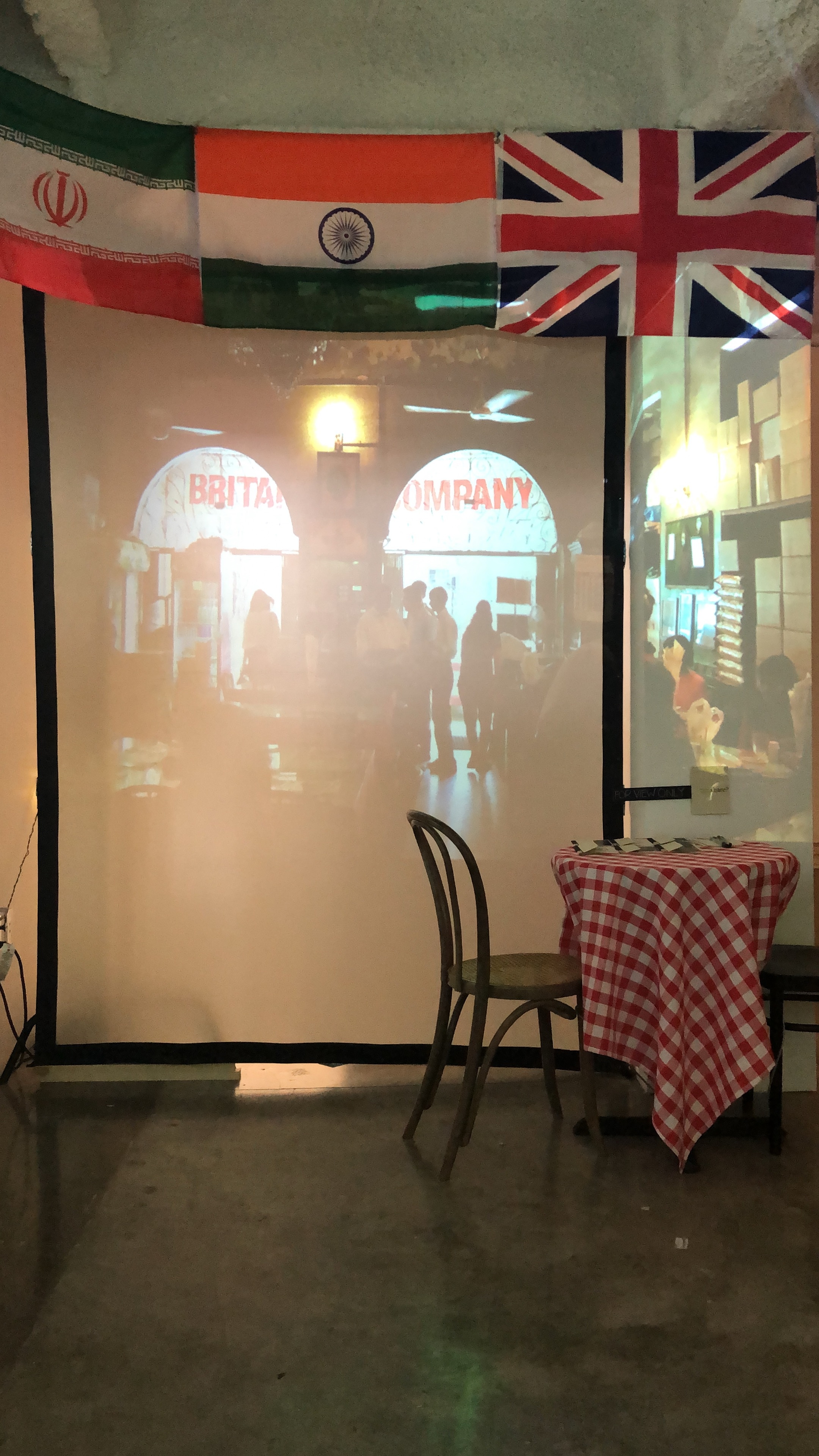
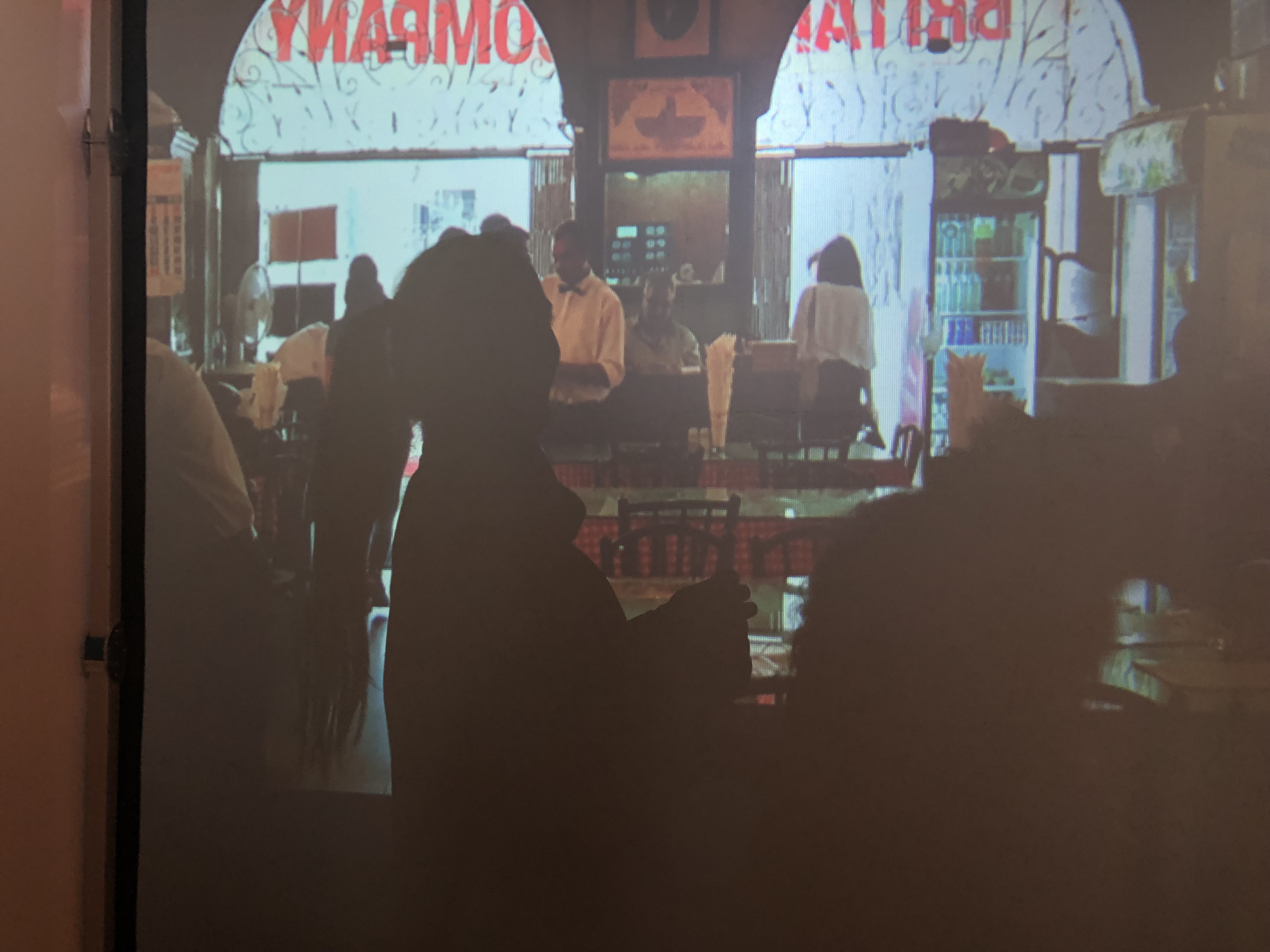
Galería de la Raza
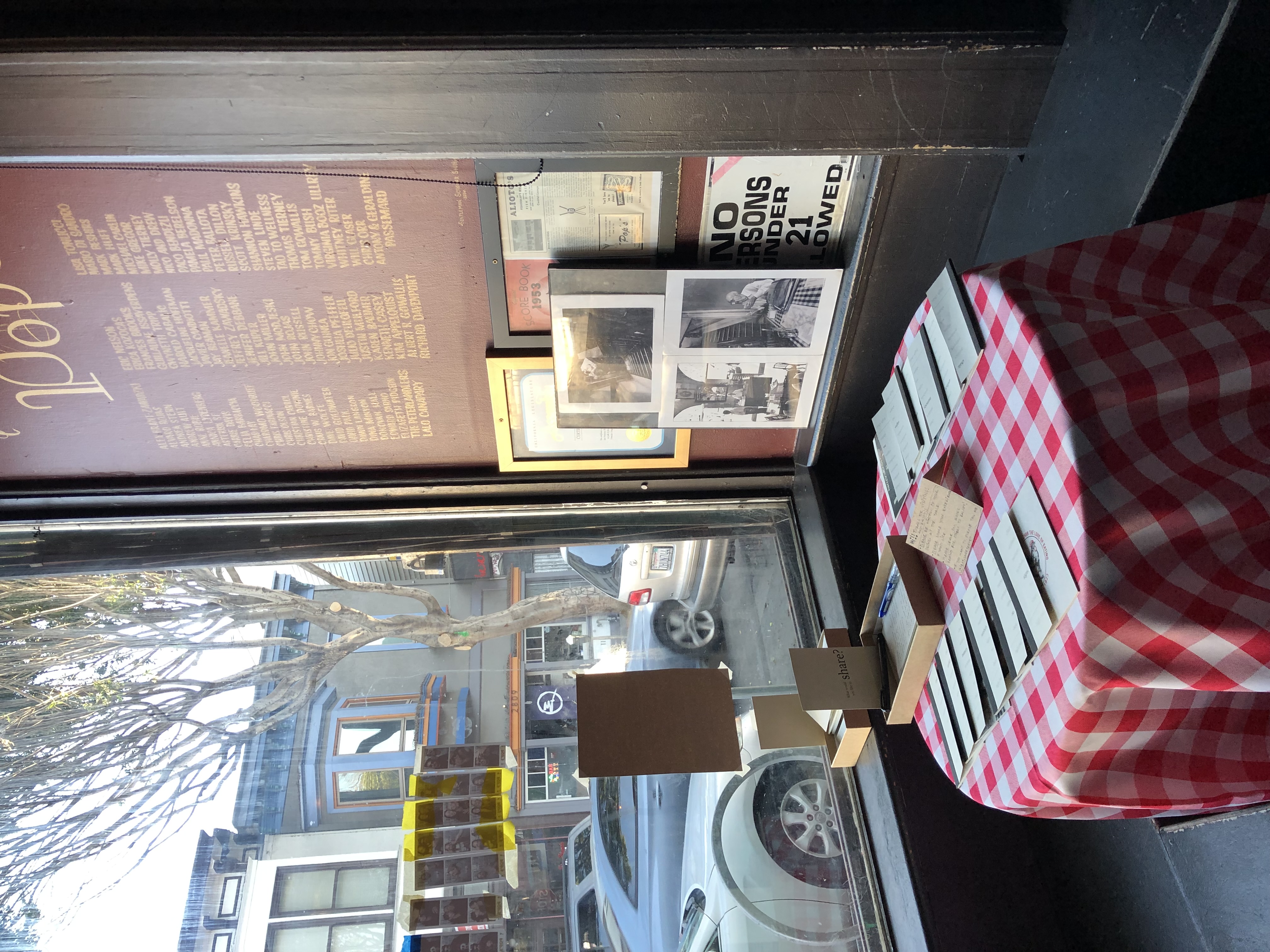
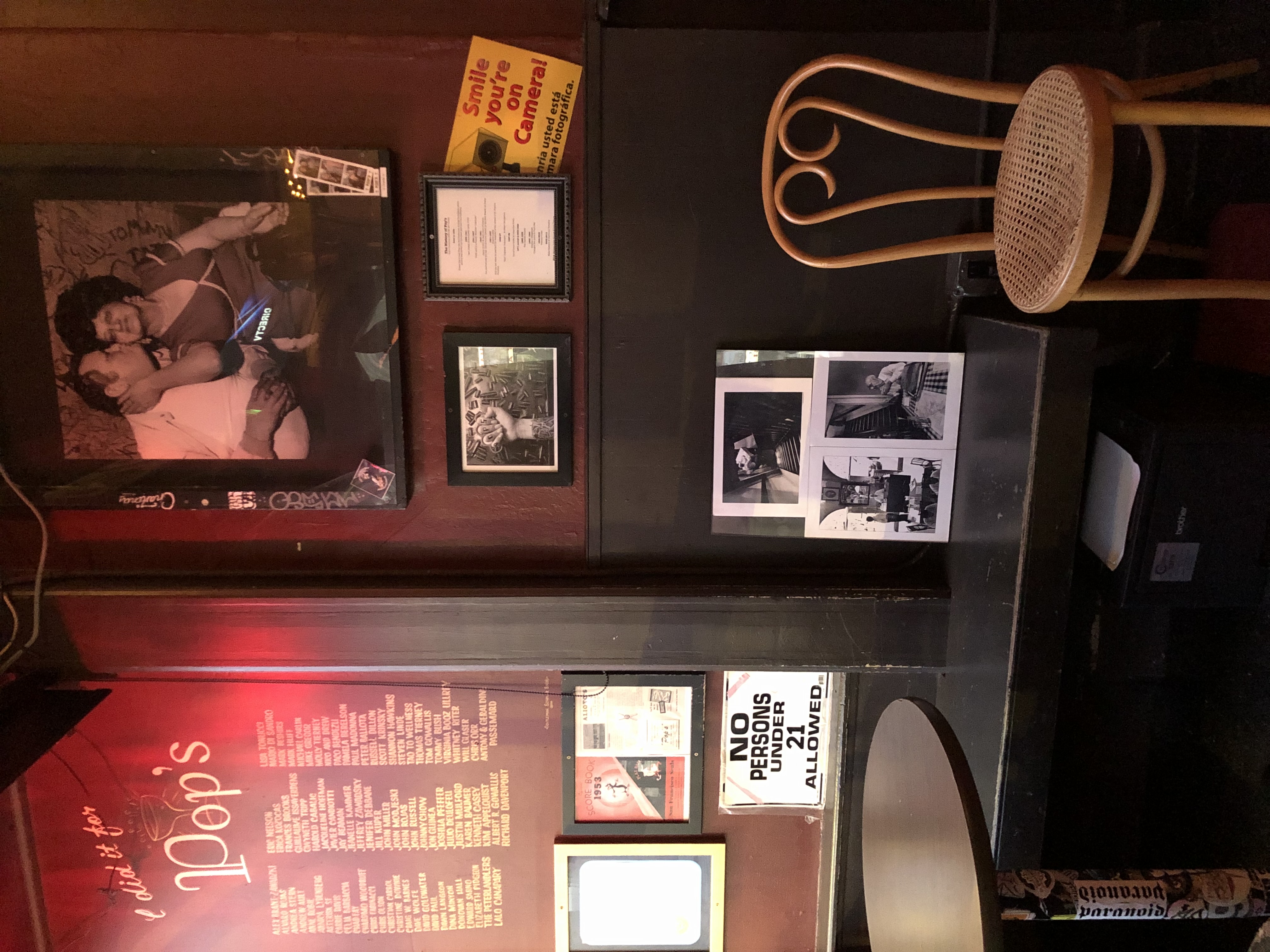
Following its initial presentation as a graduate installation at California College of the Arts, High Chai was later exhibited as part of the group show Comida es Medicina at Galería de la Raza (2018), and adapted into a pop-up installation at Pop's Bar, a dive bar in San Francisco. These iterations extended the project beyond the gallery context, placing it within varied public and informal spaces that echo the social nature of the cafés it studies.
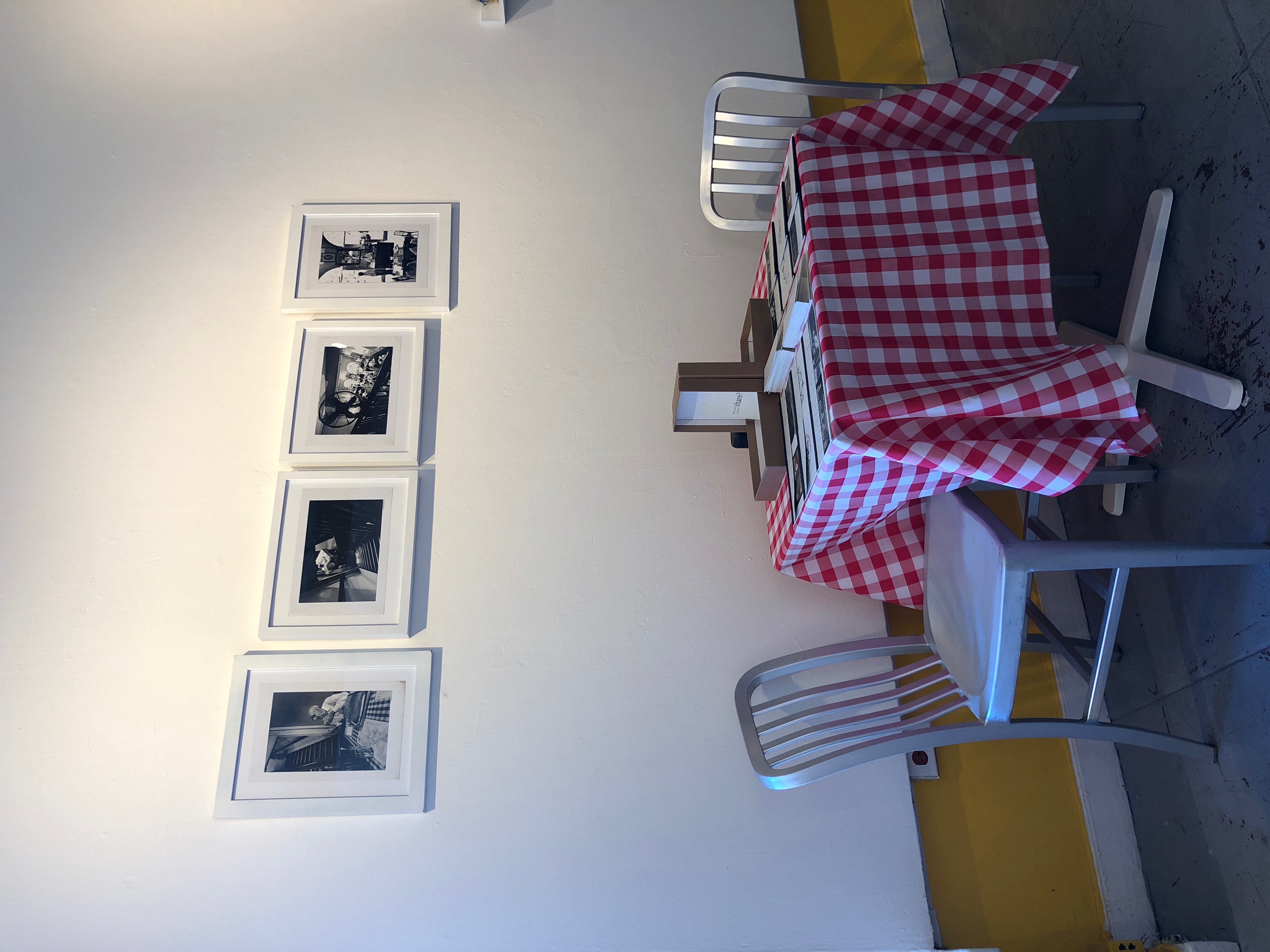
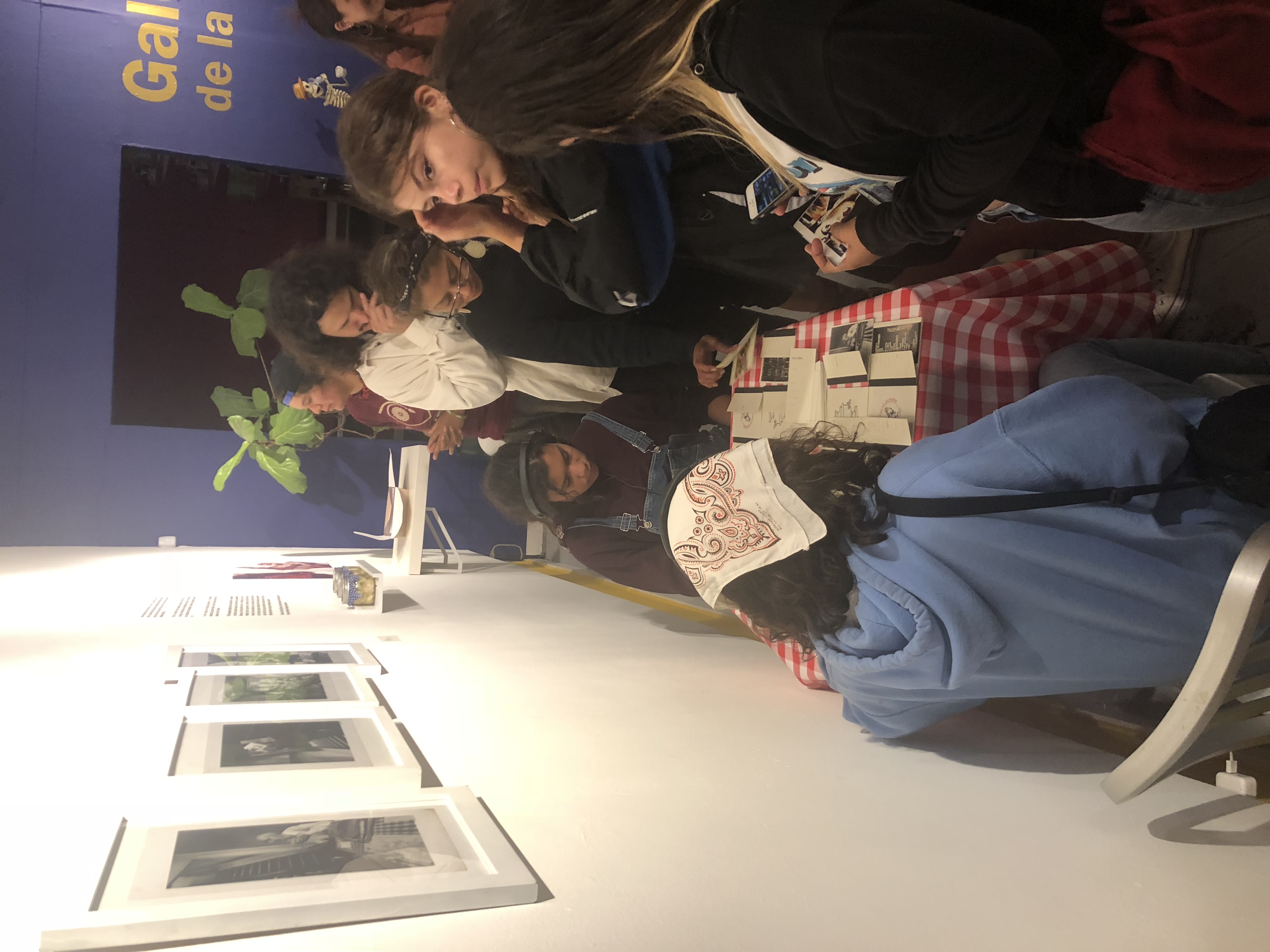
Pop's Bar
At the same time, the project reflects on the contemporary disappearance of these cafés as cities become increasingly shaped by gentrification and redevelopment, raising questions around preservation, memory, and cultural continuity. High Chai becomes an inquiry into what it means to preserve not just objects or architecture, but everyday cultural infrastructures shaped by migration and collective life. Through this work, I am interested in how food spaces carry layered histories of movement and belonging, and how their erosion signals larger shifts in how cities remember and value their cultural pasts.